Why Stone Sugar Mill Towers Stand Across Antigua
More than a hundred ruined towers still stand. Their stonework traces the wind-powered process that turned cane into sugar, molasses and rum—and the enslaved labor behind it.
- Reading
- 2 min
Morning: Cane and Wind
More than a hundred ruined stone sugar mill towers still stand across Antigua. From a car window, the natural question is: why are there so many round towers scattered across the island? The short answer is sugar cane. By the 18th century, almost all of Antigua’s farmland was given over to it, and the mills were part of the work of turning cane into sugar. The towers aren’t just odd shapes in the countryside; they belong to an industry that shaped how the land was used.
Why build them as windmills? Antigua’s dry, flat land and steady trade winds suited windmills for crushing cane. Each tower was the base for a working machine, built of local stone and often finished with brick around the openings. It’s a practical detail to notice from the road: the stone tower and the brickwork weren’t simply decoration. They were part of the structure that held the mill together.
When the sun stands overhead
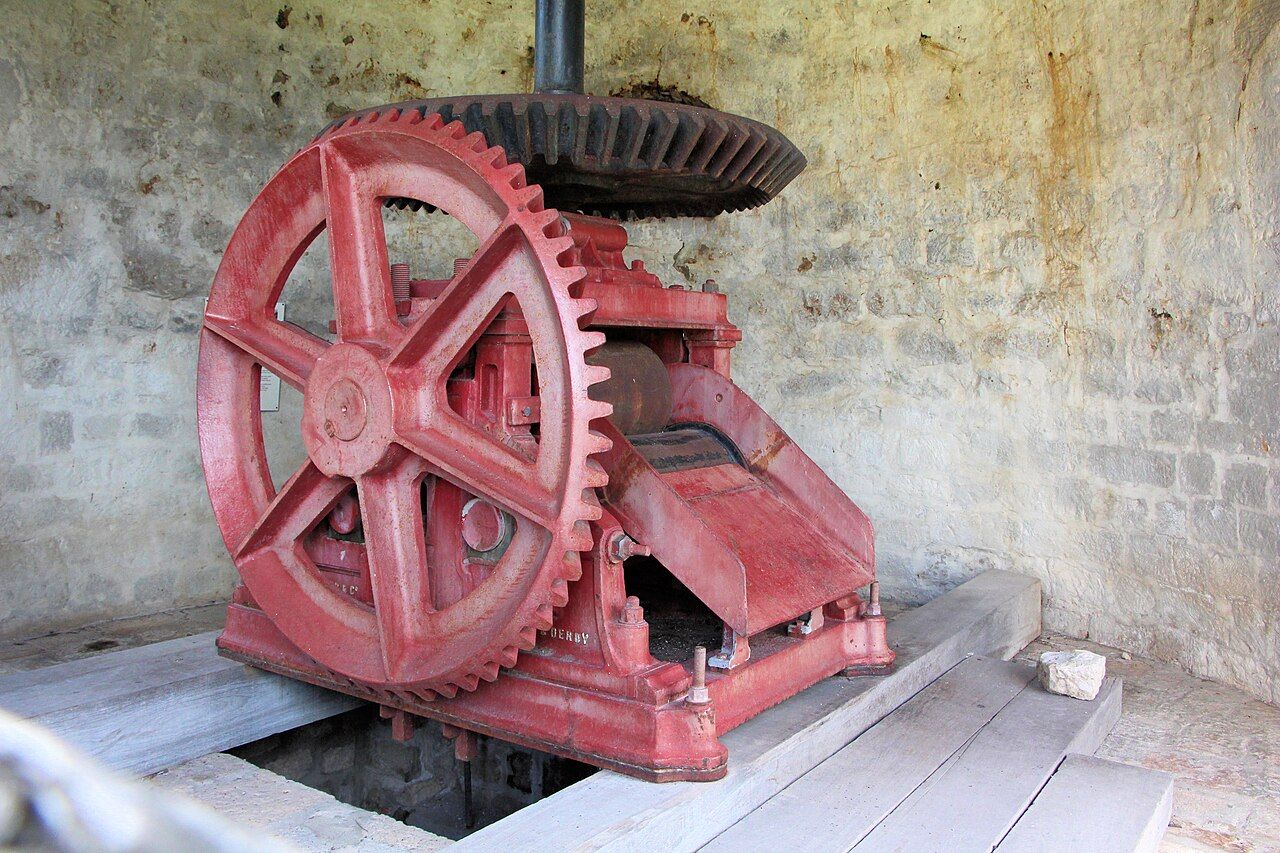
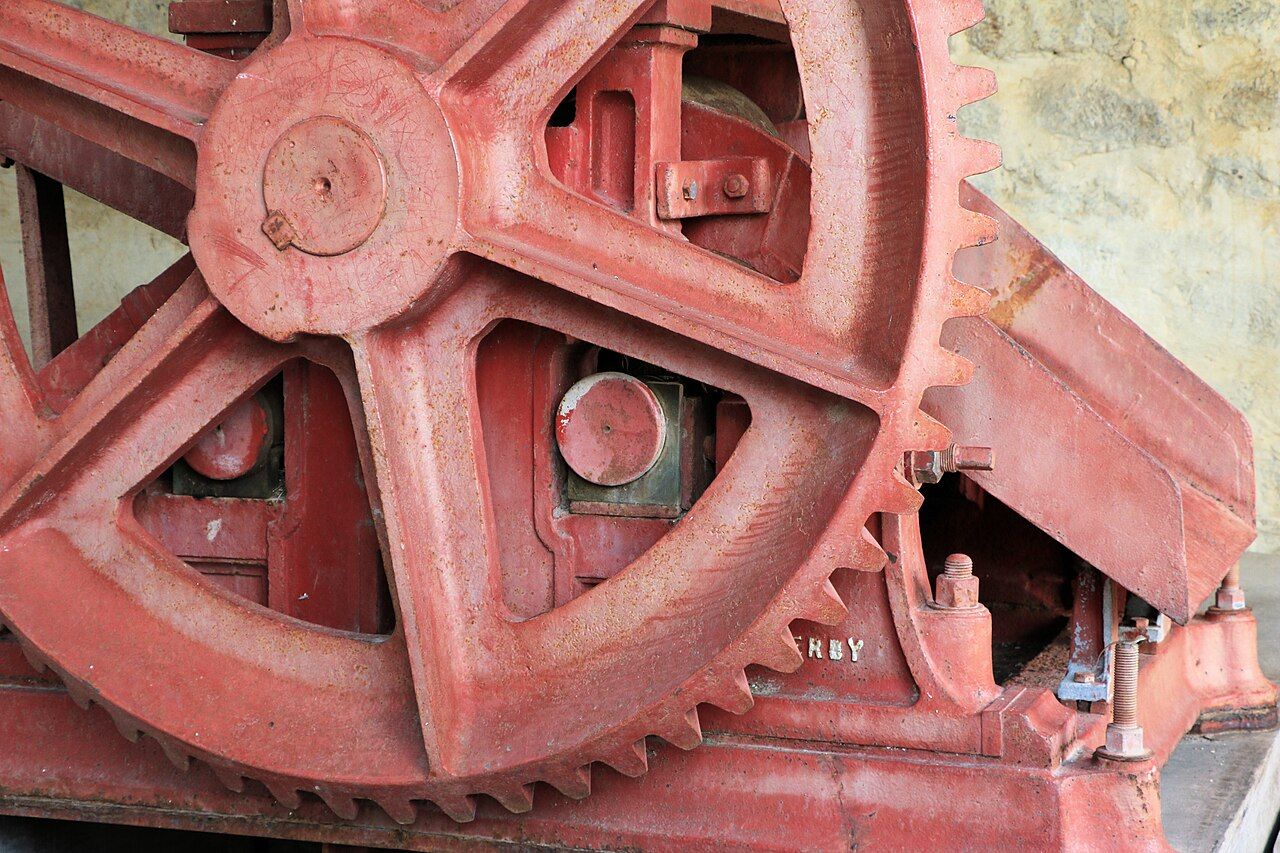
What did the wind actually do? The sails turned a set of rollers, and the rollers squeezed juice from the cane. That’s the central action: wind moving sails, sails turning rollers, rollers pressing cane. A tower can look still now, but it was built around movement (and around the steady supply of cane that made the machinery useful).
And where did the juice go? It was boiled down in copper pans to make sugar and molasses. The process didn’t stop at sugar, either: molasses from the sugar estates was distilled to make rum. So the towers point to a wider chain of work, from fields of cane to the mill and then to the boiling and distilling that followed. The whole sequence is easy to miss when the tower is only a glimpse between one stretch of road and the next.
Who built and worked the mills? Enslaved Africans. That fact belongs in the answer, not off to one side: the towers were built and worked by enslaved people, while the cane industry made use of Antigua’s farmland and wind. What remains in stone is part of that history, even when the machinery has stopped and the tower has become a landmark or a home.
Late afternoon
What does a mill tower mean today? Some have been turned into homes; others serve as landmarks on golf courses and in gardens. More than a hundred ruined towers remain across Antigua, too. Their uses differ, but each is a visible piece of the island’s sugar-making past. If a restored example helps make the old machinery easier to picture, there’s a restored working windmill.
When did the industry end? Antigua’s sugar industry ended in the early 1970s. That’s the point at which the towers stop being part of a working sugar industry and become part of the landscape’s history instead. Some have found another use, while many remain ruined stone structures. From the car window, the question can start with their round shape, then widen: what did the mills do, who did the work, and what remains of that story in the countryside now?
The numbers: More than a hundred ruined towers still stand; by the 18th century, almost all farmland was sugar cane. How many can a passing glance hold?
Photo credits: Paul Harrison: Creative Commons BY-SA 4.0; Paul Harrison: Creative Commons BY-SA 4.0.

