Beaches & Bays · Half Moon Bay
Half Moon Bay: Atlantic Waves, Pink-Tinged Sand
A crescent on Antigua’s southeast coast has bigger Atlantic waves, a calmer northern end and sand with a faint pink tint.
- Parish
- St Philip
- From St John's
- 45 minutes
- Reading
- 2 min
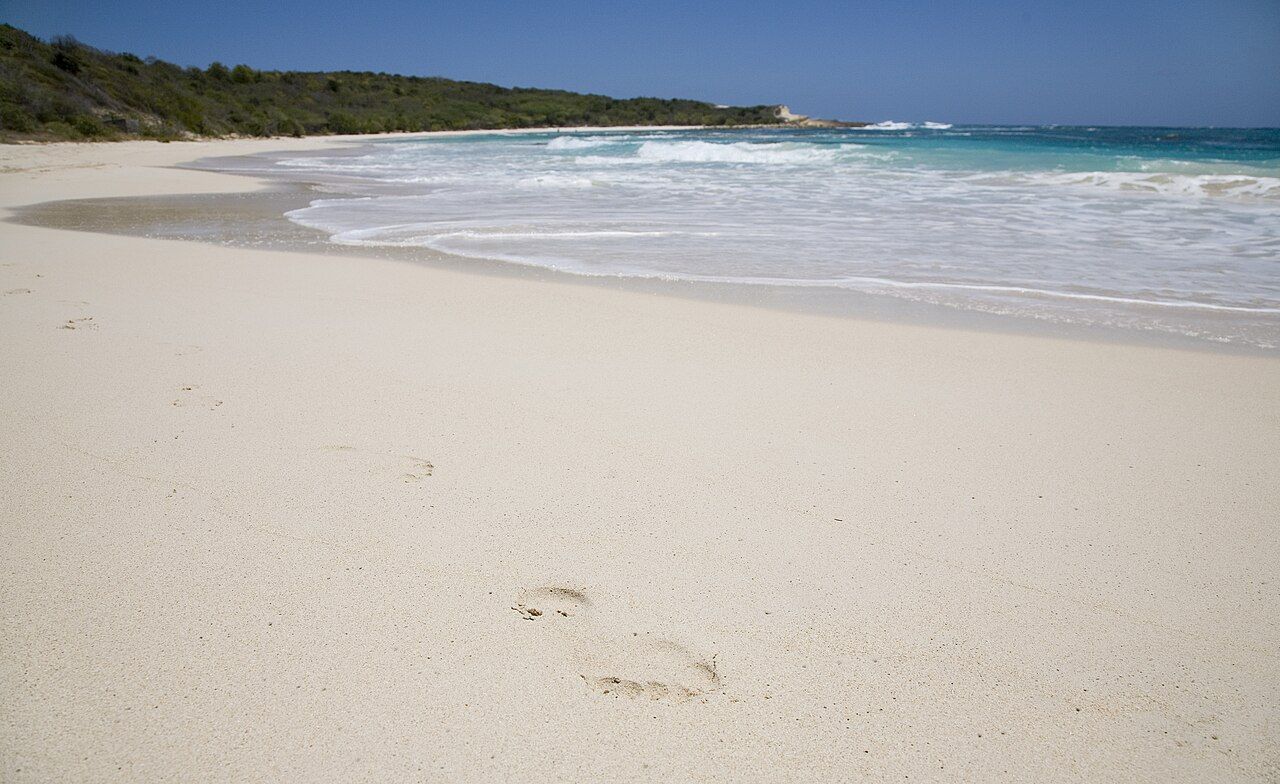
There’s a small mismatch in the name “pink sand.” The color at Half Moon Bay isn’t a bold sweep; the sand has a faint pink tint, from fragments of shell and coral. That’s the first useful correction to the picture, and the others follow the same pattern: this crescent-shaped beach has distinct ends, and the Atlantic sets a different mood from the west coast.
Myth and fact
Myth: An Atlantic beach is rough from end to end. Is it? The waves are usually bigger here than on the west coast, but that doesn’t describe the whole bay. At the northern end, rocks and a reef shelter the water, which is calmer. The southern end is more exposed and is used by body-surfers. Same crescent, different conditions along its length.
Myth: Half Moon Bay feels like the calm west. What’s actually true? It faces the Atlantic, and its waves are usually bigger than those on the west coast. The comparison matters because “beach” can sound like one general sort of place, when the coast changes the feel of the water. Here, the Atlantic-facing setting is part of the description, not a small detail to tuck away.
Myth: The sand is plainly pink. Not quite. It’s a faint tint, with fragments of shell and coral giving the sand its color. There’s no need to turn that into a brighter claim than the facts support; the pink is subtle, and the word “faint” does useful work. The beach itself is a crescent about a kilometer long, so the shape is the other obvious part of the scene.
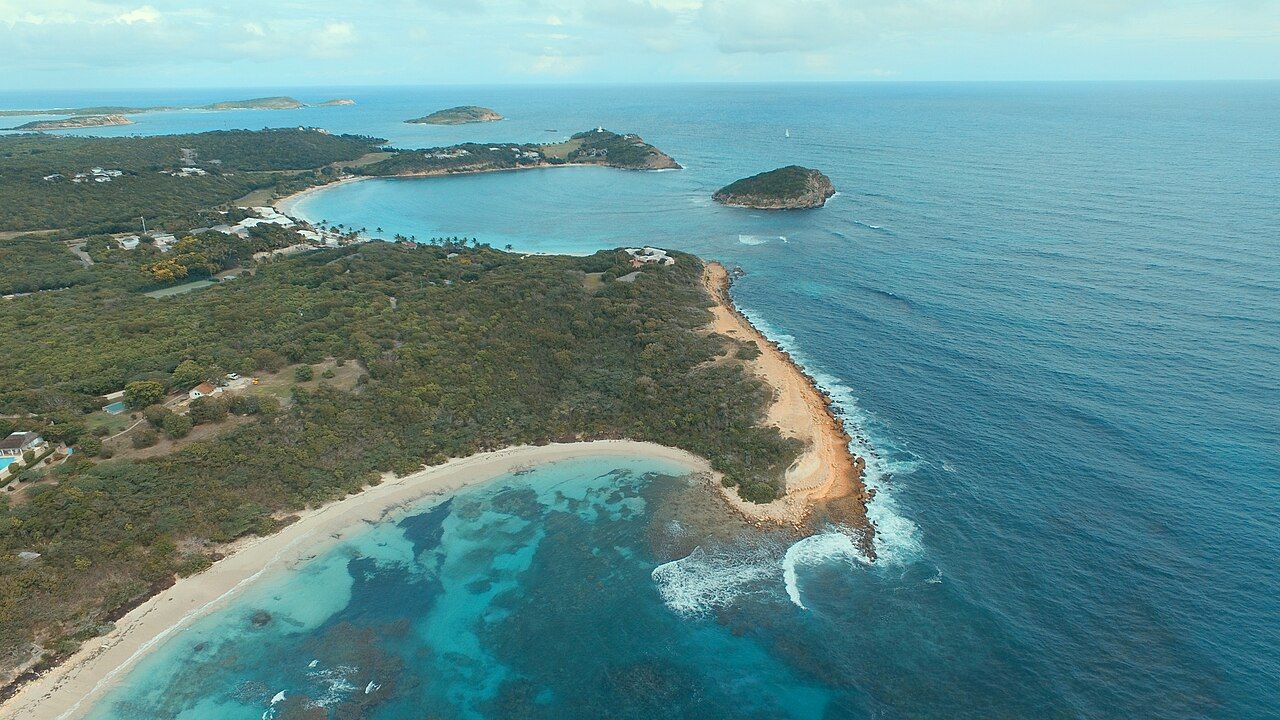
Myth: The whole bay is a single stretch of identical water. The northern end is sheltered by rocks and a reef, while the southern end is exposed and used by body-surfers. That’s the practical distinction to keep in mind when picturing the beach. The description doesn’t need to make the calmer water sound like a separate cove, or the more exposed end sound like the entire shoreline.
Myth: This is an isolated shoreline with nothing inland to place it. Half Moon Bay is in the parish of St Philip, on Antigua’s southeast coast, and the village of Freetown lies inland. The beach is reached by road through the eastern villages of St Philip. For a wider historical thread beyond the shoreline, there’s the villages founded after emancipation.
Myth: The wind is just a passing detail. The trade winds blow steadily onshore for most of the year. That belongs in the picture alongside the Atlantic waves and the sheltered water at the northern end. It’s a beach with contrasts built into its setting: crescent-shaped, faintly pink, and with different conditions at its northern and southern ends. The west coast comparison helps explain the mood, but it doesn’t erase those local differences.
The numbers: about a kilometer of beach, in St Philip. Which end would set the pace?
Photo credits: Dario Item: CC0 1.0 Universal; Андрей Бобровский: Creative Commons BY 3.0.

