The road to independence in 1981
From a labor union founded in 1939 to independence in 1981, a plain account of the movement, the milestones and the institutions that followed.
- Reading
- 2 min
1939 is the first date in this story. What happened then? The Antigua Trades and Labour Union was founded, giving the labor movement a clear marker in the account of modern Antigua and Barbuda. It’s a beginning to keep in view, though the country’s move to independence came through several distinct steps, not one single date.
The movement
Who connects the labor movement to government? Vere Cornwall Bird rose through the movement to lead Antigua’s government. The facts here establish that connection without filling in details the record doesn’t give: the union was founded in 1939, and Bird’s path into leadership ran through the labor movement. That’s the first part of the road, with the next milestone arriving later.
Did the country become independent in 1967? No. Antigua became an Associated State of the United Kingdom that year, with control of its internal affairs. That status marks a substantial step in the sequence, but it isn’t the same date as independence. Keeping those two stages separate makes the political timeline easier to follow [and keeps the terms from blurring together].
What does “Associated State” tell us here? It names the arrangement Antigua entered in 1967, while the stated fact about that arrangement is control of internal affairs. The next date is the one that marks the independent country. There’s a difference between reaching that point in the story and arriving at full independence, and the chronology gives each its own place.
Independence
When did Antigua and Barbuda become independent? On 1 November 1981. At independence, V. C. Bird became the first Prime Minister of Antigua and Barbuda. The date and the appointment belong together in the story: the country became independent, and Bird, who had risen through the labor movement to lead Antigua’s government, became its first prime minister.
What followed in the country’s political structure? The Government of Antigua and Barbuda is a parliamentary democracy, with the British monarch as head of state. The monarch is represented in Antigua and Barbuda by a Governor-General. That description sets out the head of state and the representative, two parts of the system after independence.
How is parliament arranged? It has two chambers: the House of Representatives and the Senate. The names are worth setting down plainly, since they give a compact picture of the national legislature. Independence isn’t only a date in this account; the facts also describe the institutions through which the country’s parliamentary democracy is organized.
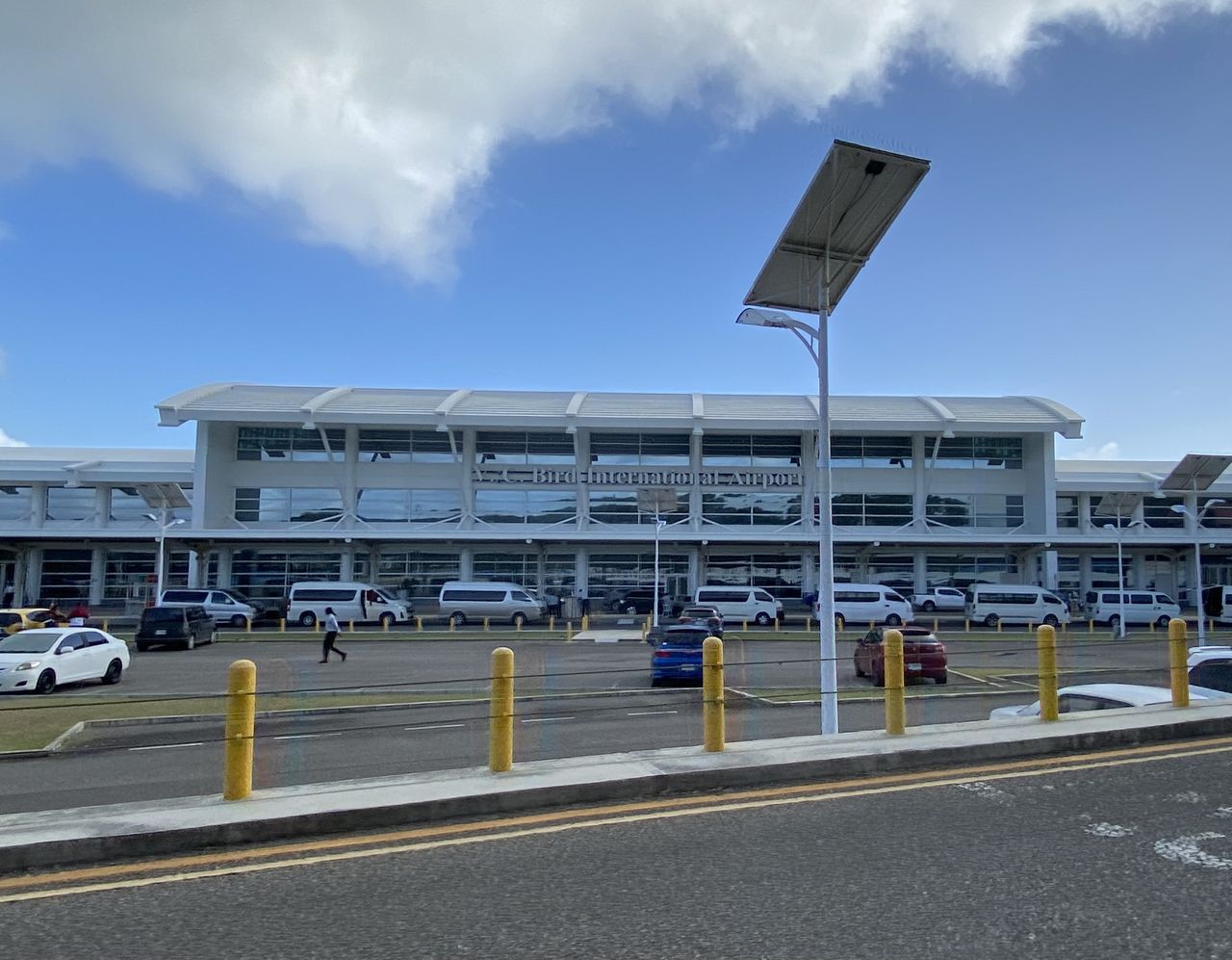
Where does Bird’s name appear beyond the first prime ministership? The main airport, V. C. Bird International Airport, is named after him. It’s a direct link between a figure in the political story and a present-day public name. For another part of the country’s public identity, there’s the national flag and emblems.
How is independence marked? Independence Day falls on 1 November, and it’s marked with parades and ceremonies in St John’s. The same date carries the moment of independence and its annual observance, bringing the political timeline back to a day on the calendar. The movement, the change of status, the new country, and the celebrations each mark a different part of the story.
The numbers: 1939; 1967; 1 November 1981. What does that sequence mean to the people who live with its legacy now?
Photo credits: CROIX: Creative Commons BY-SA 4.0.
